
none
How to Pay for Assisted Living: 7 Ways to Make Senior Living More Affordable

How to Pay for Assisted Living: 7 Ways to Make Senior Living More Affordable

One of the biggest questions older adults and their families have when considering assisted living is: How do you pay for assisted living? The monthly cost of senior living can feel overwhelming at first. But when you compare the cost of assisted living with what it really costs to remain at home—and consider the financial resources that may be available—assisted living may be closer to affordable than you think. At Nye Health Services, we help Nebraska families explore assisted living options in Fremont, Lincoln, Norfolk and Louisville. Understanding how assisted living costs work and how families commonly pay for senior living is an important first step in planning for the future.

How Much Does It Really Cost to Stay at Home?

When comparing the cost of assisted living versus living at home, don’t compare an assisted living monthly rate to a mortgage payment alone. Housing is only one part of the true cost of aging at home. Add up what you or your loved one currently spends each month on:

  • Mortgage or rent
  • Property taxes and homeowners or renters insurance
  • Electricity, gas, water, internet and other utilities
  • Groceries and dining
  • Home repairs and maintenance
  • Lawn care and snow removal
  • Transportation, car payments, insurance and fuel
  • Housekeeping
  • Entertainment and social activities
  • Emergency response or monitoring services
  • In-home care or personal assistance

As care needs change, staying at home may also require paid caregivers or additional services. Those expenses can significantly change the true monthly cost of remaining at home. Assisted living can combine many everyday expenses and services into one monthly payment. At Nye Health Services assisted living communities, amenities include three daily meals, utilities except phone, weekly housekeeping and laundry, transportation, social and recreational opportunities, and 24-hour healthcare staff onsite. Amenities and additional fees may vary by location.

Instead of asking only “How much does assisted living cost?”, consider asking: “What am I already spending each month, and what would be included if I moved to assisted living?”

7 Ways to Pay for Assisted Living

There is no single best way to pay for assisted living. Many residents and families use a combination of monthly income, retirement savings, home equity, insurance, and available benefits. Here are seven common options to consider when determining how to afford assisted living.

1. Social Security, Pensions, and Retirement Income

Social Security benefits, pensions, retirement account distributions, and other monthly income can be applied toward assisted living expenses. Remember that income currently used for groceries, utilities, home maintenance, and other household expenses may instead help cover a monthly assisted living payment after a move.

2. Savings and Investments

Savings accounts, certificates of deposit, investment accounts, and other assets are another common way to pay for senior living. A financial advisor can help you determine how to use these resources while considering your expected expenses and long-term financial needs.

3. Home Equity or Proceeds From Selling a Home

For many older adults, their home is one of their largest assets. Selling a home can make equity available to help pay for assisted living while also eliminating expenses such as property taxes, homeowners insurance, utilities, repairs, and ongoing maintenance. If you aren’t ready to sell your home immediately, consider talking with a qualified financial professional about the options available for your individual circumstances.

4. Long-Term Care Insurance

Some long-term care insurance policies may help pay for qualifying assisted living services. Coverage varies significantly by policy, including eligibility requirements, benefit amounts, and waiting periods. If you or your loved one already has long-term care insurance, review the policy before you need assisted living and contact the insurer to understand exactly what benefits may be available.

5. Veteran Benefits

Eligible veterans and surviving spouses may have access to benefits that can help with certain long-term care expenses. One benefit families may want to research is the Department of Veterans Affairs Aid and Attendance benefit. Eligibility is based on specific requirements. Contact the U.S. Department of Veterans Affairs or an accredited Veterans Service Officer for guidance about your individual situation.

6. Life Insurance Options

Depending on the type of life insurance policy, there may be options to access cash value or certain benefits during the policyholder’s lifetime. Because using a life insurance policy can have financial and tax implications, talk with the insurance provider and a qualified financial professional before making changes.

7. Family Contributions 

Some families choose to share assisted living expenses. After Social Security, retirement income, insurance benefits, and other resources are applied, family contributions may help cover a remaining monthly difference. Talking about finances before a move becomes urgent can help everyone understand what resources are available and what type of plan is realistic.

Does Medicare Pay for Assisted Living?

This is one of the most common questions families ask when researching how to pay for assisted living. Medicare does not generally pay for the room-and-board cost of an assisted living apartment. Depending on individual eligibility and circumstances, Medicaid or certain private insurance policies may provide assistance with qualifying costs. Because coverage and eligibility can vary, speak with the appropriate benefits administrator, insurance provider, or financial professional before making a decision based on expected coverage.

How to Plan for Assisted Living Costs

You don’t need to be ready to move into assisted living to start planning. In fact, learning about senior living before an urgent health or safety concern arises can give you more time to compare communities, understand costs, and decide what matters most to you. Consider taking these steps as part of your long-term senior living plan:

  • Calculate your current cost of living. Create a realistic monthly budget that includes housing, food, utilities, transportation, maintenance, and any in-home assistance.
  • Review retirement income and assets. Understand what you receive from Social Security, pensions and retirement accounts and what savings or investments may be available later.
  • Consider the future of your home. If you own a home, think about whether you would eventually sell it and how the equity could support future senior living expenses.
  • Review insurance policies. Understand any long-term care or life insurance benefits you already have before you need to use them.
  • Research assisted living communities and pricing early. Compare monthly rates, apartment options, amenities, care services, and potential additional fees.
  • Talk with your family. Share your preferences for where and how you want to live if you need more support in the future.
  • Tour communities before there’s an urgent need. Seeing assisted living communities in person can help you understand what senior living is actually like and which environment feels right for you.

Planning isn’t about predicting exactly what will happen. It’s about giving yourself more information, more time, and more choices if your needs change.

What Is Included in the Cost of Assisted Living?

Assisted living pricing can vary by community, apartment, and the services a resident needs. When comparing senior living communities, ask for more than the starting monthly price. Find out whether the monthly cost includes meals, utilities, housekeeping, laundry, transportation, activities, healthcare support and other services. Also ask which services may have additional fees and whether the monthly cost can change as care needs change. At Nye Health Services, assisted living residents have access to amenities designed to make daily life easier while supporting independence, connection and well-being. Nye also offers month-to-month agreements at its assisted living communities, giving residents and families added flexibility without a long-term lease commitment.

Assisted Living Is More Than A Place to Live

The value of assisted living isn’t limited to housing. For many older adults, moving to an assisted living community means fewer household responsibilities and more opportunities to enjoy each day. Meals are prepared, activities and neighbors are nearby, transportation is available for scheduled outings and appointments, and assistance is available when it’s needed. For family members, assisted living can also provide reassurance that their loved one has support and resources nearby. Those benefits may be difficult to put into a monthly budget, but they are an important part of comparing assisted living with remaining at home.

Explore Assisted Living in Nebraska with Nye Health Services

If you’re wondering how to afford assisted living, don’t let the monthly price keep you from exploring your options. Start by calculating what you already spend to live at home, identify the financial resources available to you, and compare the total cost with what’s included in assisted living.

You may find that assisted living is more attainable than you expected. Nye Health Services offers assisted living communities in Fremont, Lincoln, Norfolk and Louisville, Nebraska, including Nye Square, Gateway Vista, The Meadows and Nye Summit. Our team can help you learn more about assisted living services, amenities, apartment options, pricing and availability so you can make an informed decision for yourself or someone you love.

Ready to explore your options? Schedule a tour or contact Nye Health Services to learn more about assisted living in Nebraska.

This article is provided for general educational purposes and is not financial, insurance, legal, or benefits advice. Coverage, eligibility, and financial circumstances vary. Consult the appropriate financial, insurance, Veterans Affairs, or other qualified professional regarding your individual situation.

Nye Health Services Launches SPEAK OUT!® Speech Therapy Class for Individuals with Parkinson’s Disease and Movement Disorders

Nye Health Services Launches SPEAK OUT!® Speech Therapy Class for Individuals with Parkinson’s Disease and Movement Disorders

FREMONT, NE — Nye Square, part of Nye Health Services, is pleased to announce the launch of its new SPEAK OUT!® Class, a specialized speech therapy program designed to support individuals living with Parkinson’s disease and related neurological conditions in maintaining and improving their communication and swallowing abilities. The program is led through Nye Therapy & Wellness, which provides a dedicated speech-language pathologist at each campus to ensure consistent, person-centered care across the continuum of services. At Nye Square, the SPEAK OUT!® program is facilitated by Jessica Gillen, a licensed SPEAK OUT!® Provider with Nye Therapy & Wellness. Under her clinical guidance, participants engage in structured voice and speech exercises designed to strengthen communication skills and improve quality of life.

Developed by the Parkinson Voice Project, the SPEAK OUT!® Therapy Program combines education, individualized speech therapy, SPEAK OUT!® group classes, daily home practice, and ongoing follow-up care. The goal is to help individuals with Parkinson’s and related disorders regain and retain their speech and swallowing function for life.

Up to 90% of people with Parkinson’s are at risk of losing their ability to speak. In addition, swallowing complications account for 70% of the mortality rate in this patient population. Our vision at Parkinson Voice Project is to make quality speech therapy accessible to people with Parkinson’s worldwide,” said Samantha Elandary, Parkinson Voice Project’s Founder and Chief Executive Officer.

In addition to the SPEAK OUT!® Class, Nye Square also hosts a monthly Parkinson’s Support Group, offering a welcoming environment for individuals and families to share experiences, resources, and encouragement. “This program is about restoring confidence in communication,” said Gillen. “Speech is essential to connection, independence, and dignity, and SPEAK OUT!® gives participants the tools to maintain those abilities long-term.”

The SPEAK OUT!® Class is free and open to the community, reinforcing Nye Health Services’ commitment to accessible, high-quality care and community engagement. For more information about the weekly SPEAK OUT!® Class in Fremont, please call 402-753-6130.

An elderly woman reads from a booklet while a caregiver holds up a smartphone on a tripod and gives a thumbs-up.

About Nye Health Services
Nye Health Services provides compassionate, person-centered care that enhances the health and well-being of older adults across Nebraska. Guided by our mission to celebrate life through exceptional service and innovative leadership in personalized care, we support individuals and families at every stage of aging with dignity, respect, and innovation. We offer a full continuum of services—including Assisted Living, Independent Living, Short-Term Skilled Care, Long-Term Care, Respite Care, Outpatient Therapy, and Memory Care—designed to promote independence, safety, and quality of life. Across six welcoming, home-like campuses in Nebraska, including Fremont, Norfolk, Louisville, and Lincoln, we are committed to helping residents feel comfortable, supported, and truly at home.

About Parkinson Voice Project
Parkinson Voice Project is a 501(c)(3) nonprofit organization solely dedicated to helping people with Parkinson’s and related disorders REGAIN and RETAIN their speech and swallowing. The organization provides SPEAK OUT! Booklets, online SPEAK OUT! Home Practice Sessions, and a weekly Parkinson’s Sing-Along to complement the speech therapy they will receive at Nye Square. The organization is headquartered in Richardson, Texas, and has trained over 11,500 SLPs and 16,600 students in more than 50 countries.  For information, visit www.ParkinsonVoiceProject.org.


The Masonic Dream

The Masonic Dream

THE MASONIC DREAM

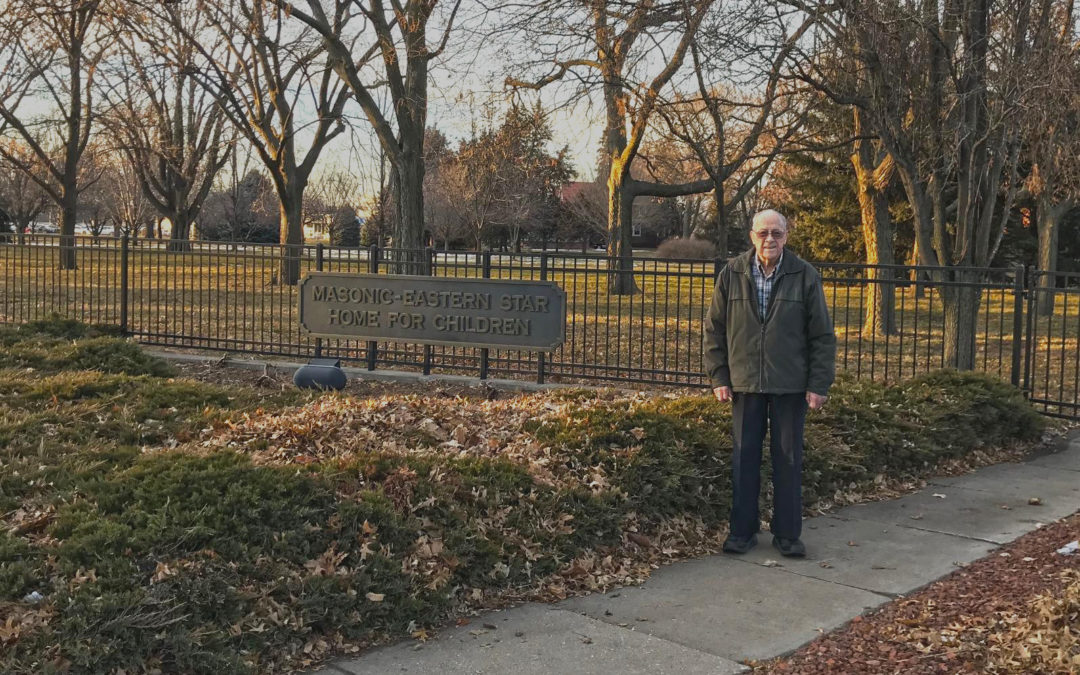
Charles Edward House (Ched House), a Nye Square resident, was uncertain of his future when he was brought to the Masonic-Eastern Star Home for Children (M-ESHC) in Fremont, Nebraska at age 14 by his mother, who was a member of the Order of the Eastern Star. While serving as the president on the Board of Directors of the Children’s Home for 32 years, he looks back on his experience with a grateful heart, knowing The Masonic Home held an experience most kids only dream about — a safe and supportive environment, encouraging them to thrive in life and pursue their dreams.

Ched was born on October 31st, 1924 in Omaha, Nebraska where he lived with his mother, father, and his older brother Rodney. His family experienced an event that changed the trajectory of their lives in an instant. Their husband and father died of a sudden heart attack at age 41 leaving two teenage boys and a wife with no source of income to fend for themselves.  His mom was left to endure the economic hardships on her own. She was forced to give up the house, and two years later, upon taking on a better paying job in Sioux City, IA, she was forced to part ways with her kids — an emotional hard set of events. Rodney graduated which qualified him to enlist in the armed forces, and Ched, a freshman at Omaha North High School, quickly found the Masonic-Eastern Home for Children in Fremont, Nebraska.

His father had been a Mason for several years, therefore, Ched was fortunate enough to have had a connection with M-ESHC prior to his father passing.  Ched’s earliest memories of the Home rooted back to the annual picnic where he, and other kids from The Home, fished Vess soda pop out of a stock tank filled with water, blocks of ice, and watermelons. Listening to his father play in the Shrine band and dixieland band at the Home’s annual picnic also became a fond memory.

At the time of his admission, M-ESHC consisted of four two story buildings called “cottages”, each housing 15-16 children and a full working farm. The kids learned how to take care of themselves by cooking, setting the table for meals, and cleaning. The boys also learned how to raise and butcher their own livestock for their food supply.

Ched settled into the home very quickly, and found himself working on the farm detail – raising pigs, chickens, cows, plowing the fields using their own working mules, and delivering five gallon milk cans of fresh milk to the cottages each morning and night. He relished in his purpose on the farm.

When asked if it was hard being away from his mother, he said, “it was always nice to see her, but the farm became my home, and I was always excited to get back with the kids.” He was living a dream.

During his junior year at Fremont High, he became a trusted driver and was privileged to chauffeuring the cottage parents to and from their personal churches each Sunday.  He attended church himself and was an usher.  When he finished church duty, he would pick the parents up and take them home.

In 1942, Ched graduated from Fremont High and went off to college in Lincoln, Nebraska.  WWII interrupted his plans and he served in the military for a year before he was medically discharged back home.  With no place to return, M-ESHC welcomed him back with open arms until he was able to figure out his next steps in life.  He continued to stay closely connected with the home visiting Mr. Hartman, who was the executive director and father figure to him.

Ched had been dating a lovely lady, Ruby Gifford, whom he met in choir his senior year of high school. They dated throughout college, and Ched explained how he would hitchhike six hours to visit Ruby at Drake University in Des Moines, Iowa and how he’d take the train back to Lincoln following their visit. In 1946, Ruby gave him a ring at Christmas for becoming a Master Mason.  This ring represented the Freemasonry symbol — a square and compasses featuring a “G” in the center. Both the square and compasses are architect’s tools and are used in the Masonic ritual as emblems to teach symbolic lessons. This ring also is a symbol of loyalty to the masonry mission and values, and a loyalty to each other. He said, “By this time, I knew she was really liking me.”  He was right, they later married on June 22, 1947 and raised two children of their own, Leslie and David.

Ched and Ruby were in business together with Ruby as the book keeper and Ched as the manager. They managed and renovated alfalfa meal warehouses in Grand Island and Valley. They later managed a lumberyard together in Arlington, and went on to own and operate it for 36 years. When asked about retirement, he chuckled and said “I’ve retired three times – age 65, 75, and 85.”

Along the way, he emerged himself in giving back to The Home by working his way up through the Eastern Star, Grand Chapter, and onto the board of M-ESHC in 1984.  His wife, Ruby was also active with The Home serving on the board from 1967 to 1974. After two years on the board, Ched was nominated and elected president, and has been re-elected each year since. He humbly serves this position and at 93 years old, has 34 years under his belt.

He looks back and feels as if he had a chance at life when his world was dismantled as a young teenager. Full of gratitude, he’s thankful for the experience which taught him how to be a successful citizen, husband, father, and friend in a world that holds many uncertainties, never once questioning the dreams that live at M-ESHC. A dream that now runs thick in his blood as he continues to serve and dedicate his service on helping a child and family like the home did for him. He concludes saying, “Once a Home kid, always a Home kid.”

Nye Health Services Award-Winning Campuses & Services

Nye Health Services  · 750 East 32nd  Street ·  Fremont, Nebraska 68025  ·  402.753.1400  ·  Privacy Policy | XML Sitemap

© Copyright All Rights Reserved.

Google Partner: Omaha SEO Company

Equal-Housing-Logo-white